Proceso — Cómo se haceProcess — How it's made
El proceso es la mitad del producto.The process is half the product.
Nada de lo que vendo sale de una cadena de montaje. Estas son las tres mesas de trabajo de cozyami y lo que ocurre en cada una, paso a paso.Nothing I sell comes off an assembly line. These are cozyami's three worktables and what happens at each one, step by step.
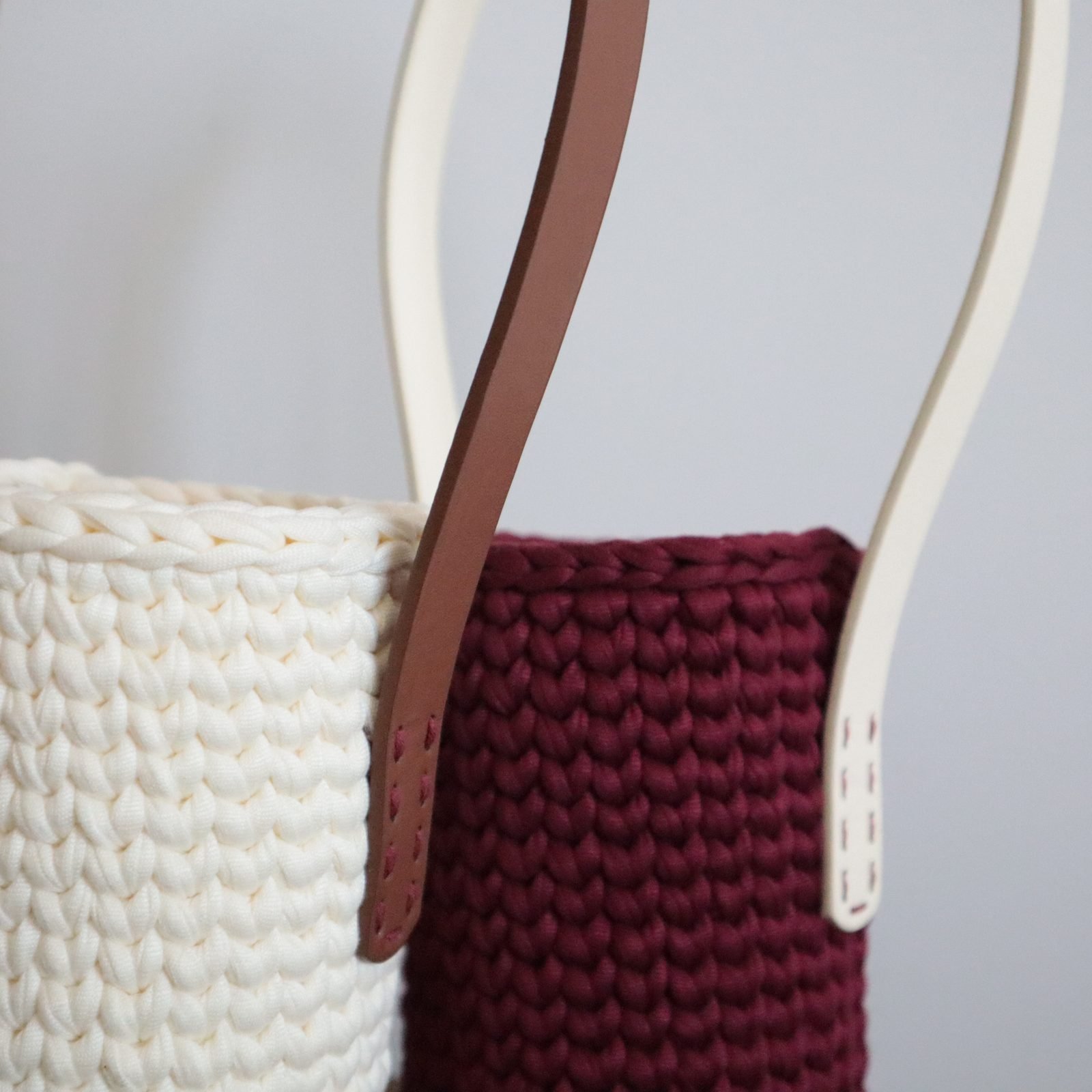
Oficio 01 — Detalle del punto y el bordeCraft 01 — Detail of the stitch and edge
Ganchillo — botelleros y posacopasCrochet — bottle & glass holders
Los botelleros y posacopas nacen de un ovillo y una aguja de madera. No hay máquinas: solo puntos contados y muchas horas de oficio.Bottle and glass holders start life as a ball of yarn and a wooden hook. No machines — just counted stitches and many hours of craft.
01
La fibraThe fiber
Trabajo con algodón reciclado e hilos naturales sin teñir, escogidos por tacto y resistencia. Un botellero tiene que aguantar el peso de una botella llena muchas veces.I work with recycled cotton and undyed natural yarns, chosen by feel and strength. A bottle holder has to bear the weight of a full bottle, over and over.
02
El puntoThe stitch
Cada pieza se teje punto a punto. Un botellero lleva unas seis horas; un posacopa, algo más de una. La tensión del hilo se ajusta a mano para que la pieza no ceda con el uso.Every piece is crocheted stitch by stitch. A bottle holder takes about six hours; a coaster, a bit over one. Thread tension is adjusted by hand so the piece doesn't give with use.
03
El remateThe finish
Se rematan los cabos uno a uno, se lava la pieza y se seca en plano. Así el algodón asienta y el tejido queda listo para el uso diario — y para la lavadora.Loose ends are woven in one by one, the piece is washed and dried flat. That lets the cotton settle so the fabric is ready for daily use — and for the washing machine.
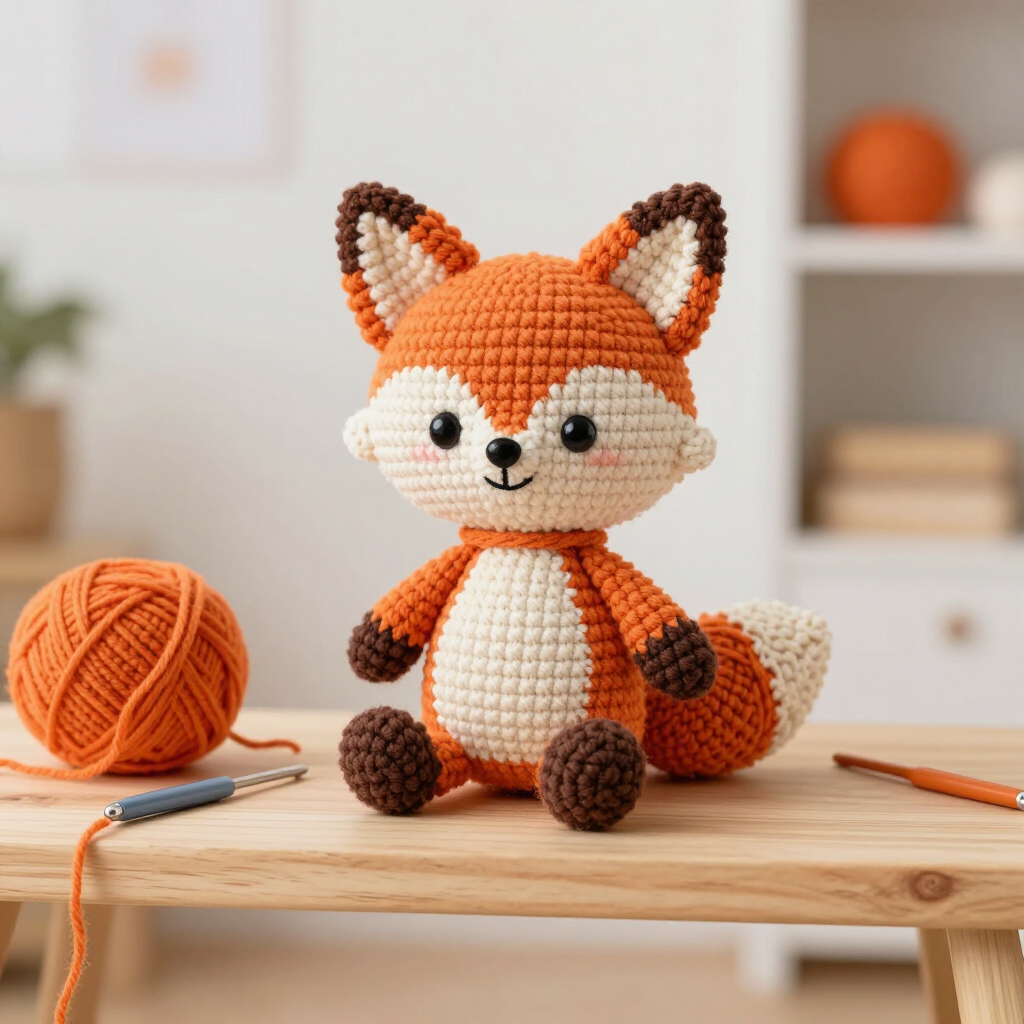
Oficio 02 — Cuaderno de patrones y zorro en pruebasCraft 02 — Pattern notebook and fox in progress
Amigurumi — del garabato al patrónAmigurumi — from doodle to pattern
Los patrones de amigurumi que vendo — aquí y en Etsy — son el resultado de semanas de pruebas condensadas en un PDF claro, con fotografías de cada paso.The amigurumi patterns I sell — here and on Etsy — are the result of weeks of trials condensed into a clear PDF, with photos of every step.
01
El bocetoThe sketch
Cada personaje nace en el cuaderno: proporciones, expresión y paleta se dibujan antes de tocar el hilo. El zorro del bosque pasó por cuatro morros distintos.Every character starts in the notebook: proportions, expression and palette are drawn before I touch the yarn. The forest fox went through four different snouts.
02
Las pruebasThe trials
Tejo la pieza varias veces ajustando aumentos y disminuciones hasta que el patrón se puede seguir sin sorpresas, incluso si es tu primer amigurumi.I crochet the piece several times, adjusting increases and decreases until the pattern can be followed without surprises, even if it's your first amigurumi.
03
El patrónThe pattern
Lo escribo paso a paso, con guía de puntos, lista de materiales y fotografías del proceso. Se descarga en PDF y también está disponible en mi tienda de Etsy.I write it step by step, with a stitch guide, materials list and process photos. It downloads as a PDF and is also available in my Etsy shop.
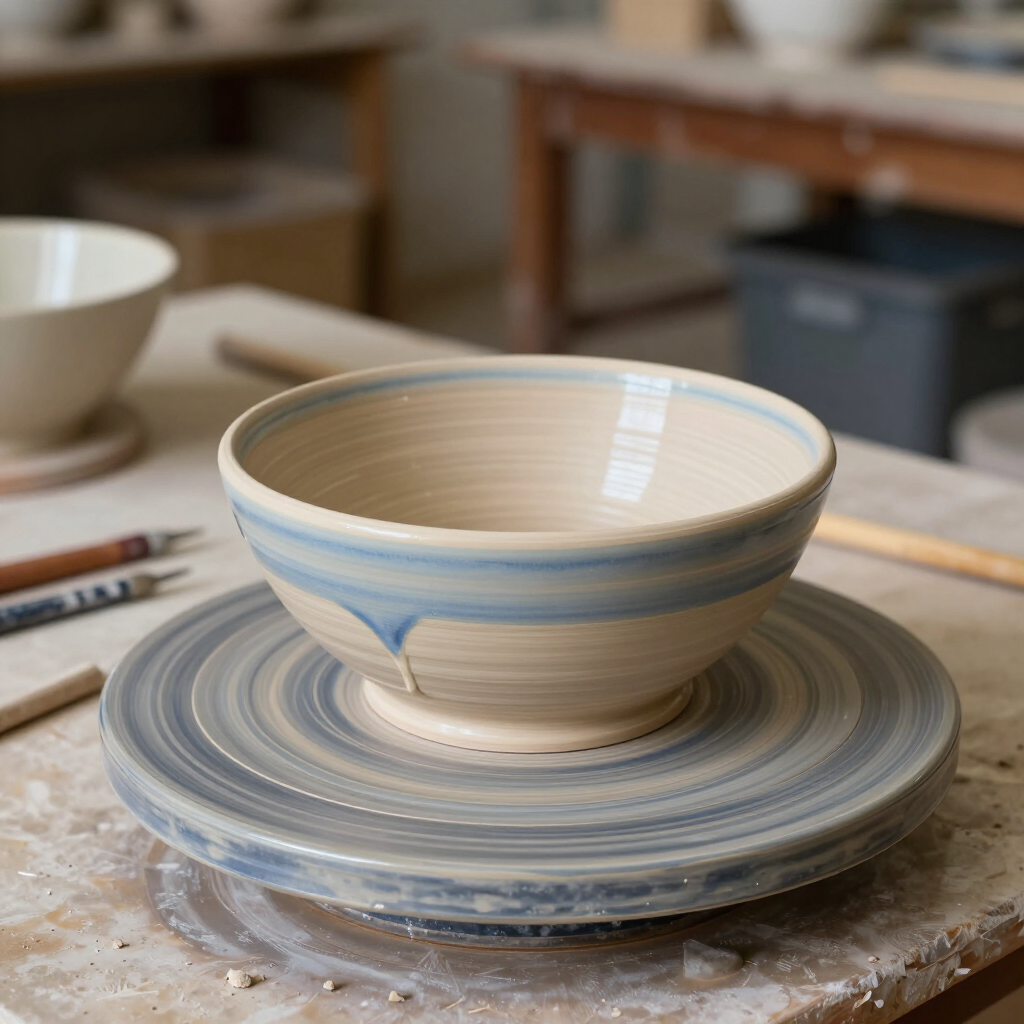
Oficio 03 — Cuencos recién torneados, secándoseCraft 03 — Freshly thrown bowls, drying
Alfarería — barro, torno y fuegoCeramics — clay, wheel and fire
La alfarería es el oficio más antiguo de la casa y el que más paciencia pide: entre el amasado y la cocción pasan días. La colección de piezas crece hornada a hornada.Ceramics is the oldest craft in the house and the one that asks for the most patience: days pass between kneading and firing. The collection grows kiln load by kiln load.
01
El barroThe clay
Se amasa el gres para sacarle el aire y dejarlo uniforme. Es un trabajo físico y silencioso que decide gran parte del resultado final.The stoneware is kneaded to work out the air and make it even. It's quiet, physical work that decides much of the final result.
02
El tornoThe wheel
Cada cuenco se levanta en el torno, se retira a mano y se deja secar despacio. Las marcas de los dedos y los anillos del torneado se quedan: son la firma de la pieza.Every bowl is thrown on the wheel, lifted off by hand and left to dry slowly. The fingerprints and the throwing rings stay — they're the piece's signature.
03
El fuegoThe fire
Después del esmaltado viene la cocción a alta temperatura. El horno siempre deja una sorpresa: dos piezas del mismo esmalte nunca salen iguales.After glazing comes the high-temperature firing. The kiln always leaves a surprise: no two pieces with the same glaze ever come out alike.
«Si después de ver el proceso te apetece aprender, el taller abrirá sus puertas pronto.»"If seeing the process makes you want to learn, the workshop will open its doors soon."
Ver el tallerSee the workshop